
High-Pressure Pumps (75 bar)
Critical for forcing feedwater through RO membranes. Monitored for discharge pressure, flow, motor current, vibration, and seal leakage.
An integrated AI platform for RO desalination plants — real-time monitoring, predictive maintenance, computer vision leak detection, fire safety, operator training, and IEC 62443 cybersecurity.
The roadmap focuses on high-value rotating and electrical assets that drive RO plant reliability, energy recovery, and safety.
Critical for forcing feedwater through RO membranes. Monitored for discharge pressure, flow, motor current, vibration, and seal leakage.
Captures pressure from the concentrate stream to cut power demand. Tracked for inlet/outlet pressure, efficiency, and brine flow to sea.
Maintains required suction and discharge pressure ahead of the high-pressure stage — a primary early-warning asset for cavitation and imbalance.
Controls pump motor speed and startup torque. Rooms must stay near 15°C — cooling failure risks catastrophic drive damage.
Electrical rooms and cooling systems underpin plant uptime. Thermal and fire risk monitoring is mandatory for personnel and asset protection.
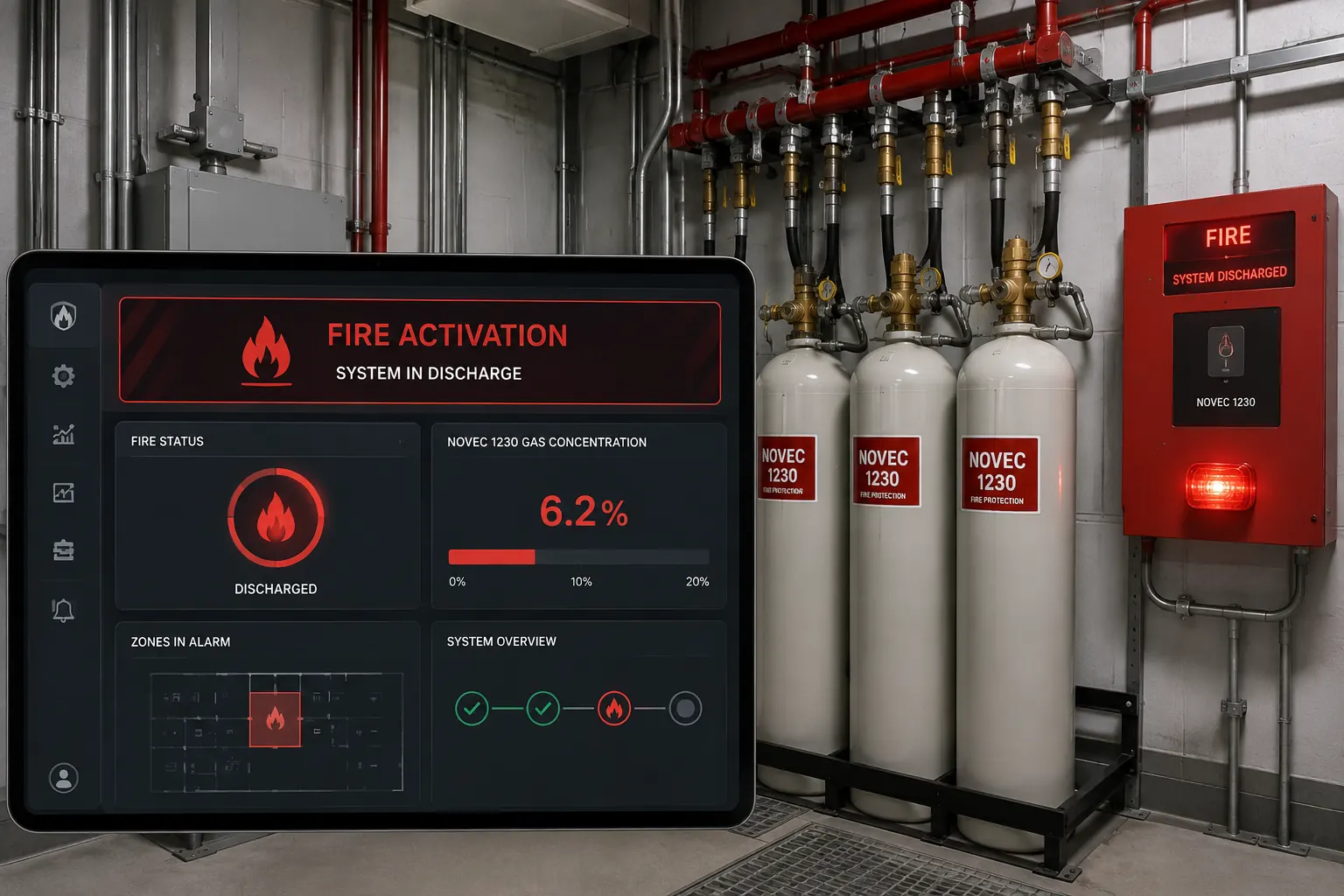
Already installed clean-agent system. Digital integration adds activation alerts, zone location, and gas concentration monitoring for safe re-entry.
Standard SCADA shows current state and setpoint alarms. Defects are often caught too late — leading to rush spare parts, unplanned shutdowns, and safety exposure.
Alignment was performed at commissioning, yet vibration can rise without a clear cause. It is a critical indicator of bearing and shaft wear.
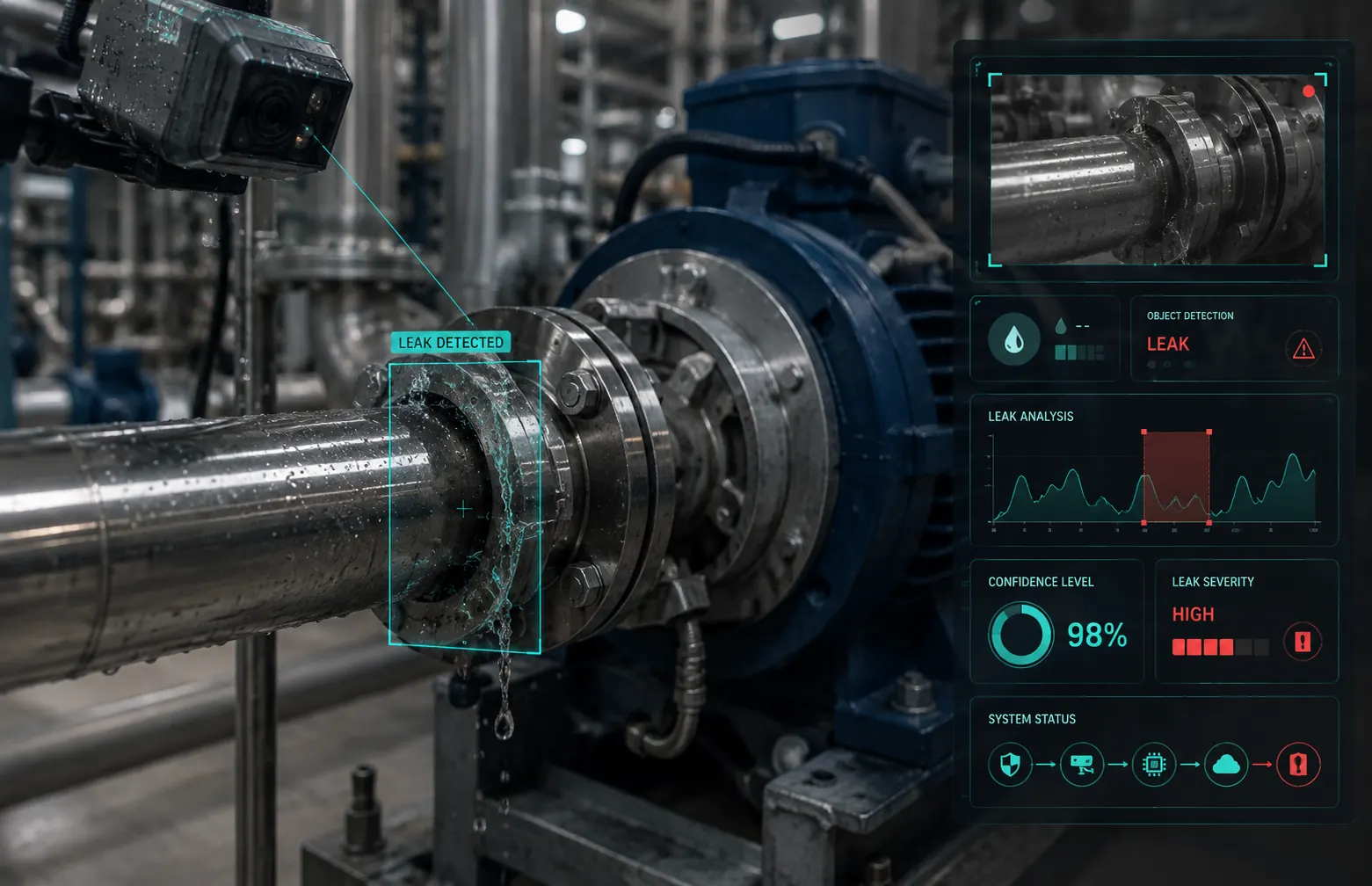
High operating pressure makes seal and pipeline leaks critical. Early visual detection prevents escalation into catastrophic failures.
VFD rooms must maintain ~15°C air temperature. Cooling failure can destroy drives and force emergency plant stoppage.
Electrical rooms require continuous fire protection and monitoring — minutes of lead time matter more than seconds of post-ignition alarm.
After fire-suppression discharge, hazardous atmospheres (gas, smoke, byproducts) make human entry unsafe until concentrations clear.
Operators need ~4 weeks of warning to order long-lead spares and convert emergency shutdowns into planned maintenance.
From a central AI command center to edge computer vision, predictive analytics, remote inspection robotics, training twins, and OT cybersecurity — one integrated stack for desalination operations.
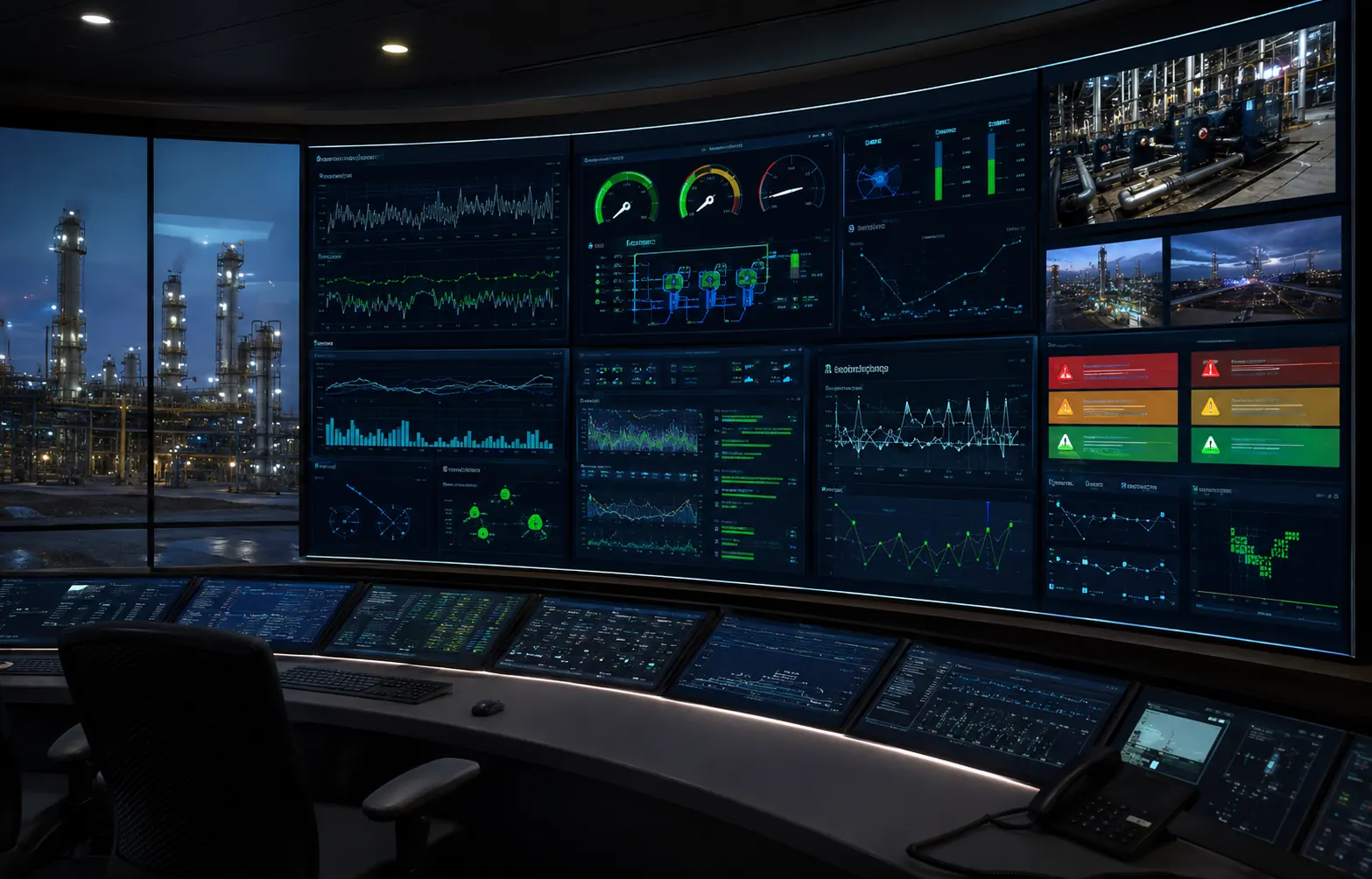
An online central command center for the desalination plant. It integrates real-time sensor data, AI predictions, live CCTV streams, and the AI assistant into one operational view.
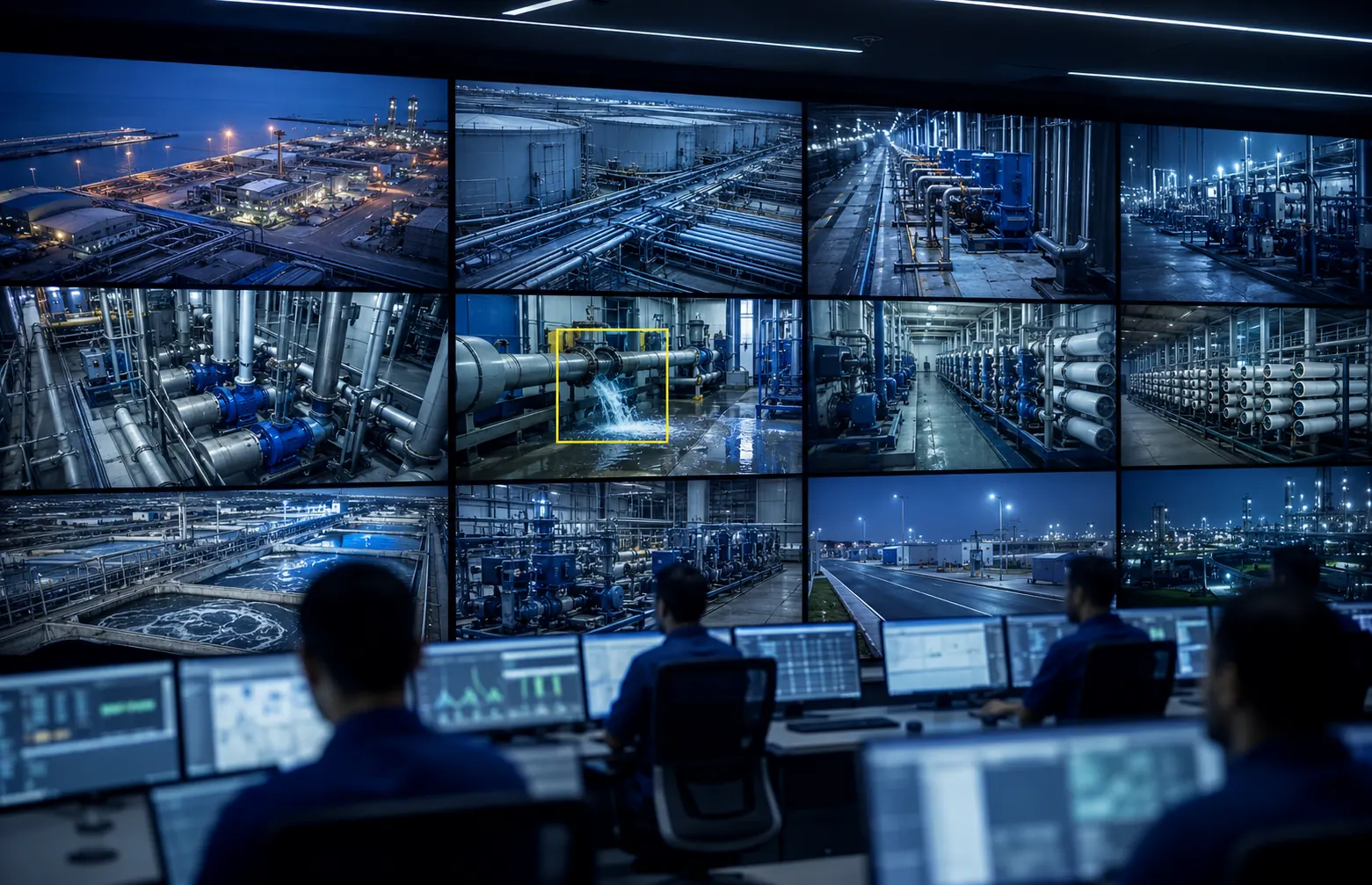
AI analyzes live CCTV feeds to detect water droplets, puddles, spray, or steam. When a leak is found, the dashboard highlights the camera, draws a bounding box, and saves a snapshot. Operators can stream any camera, view multiple feeds, and control PTZ.
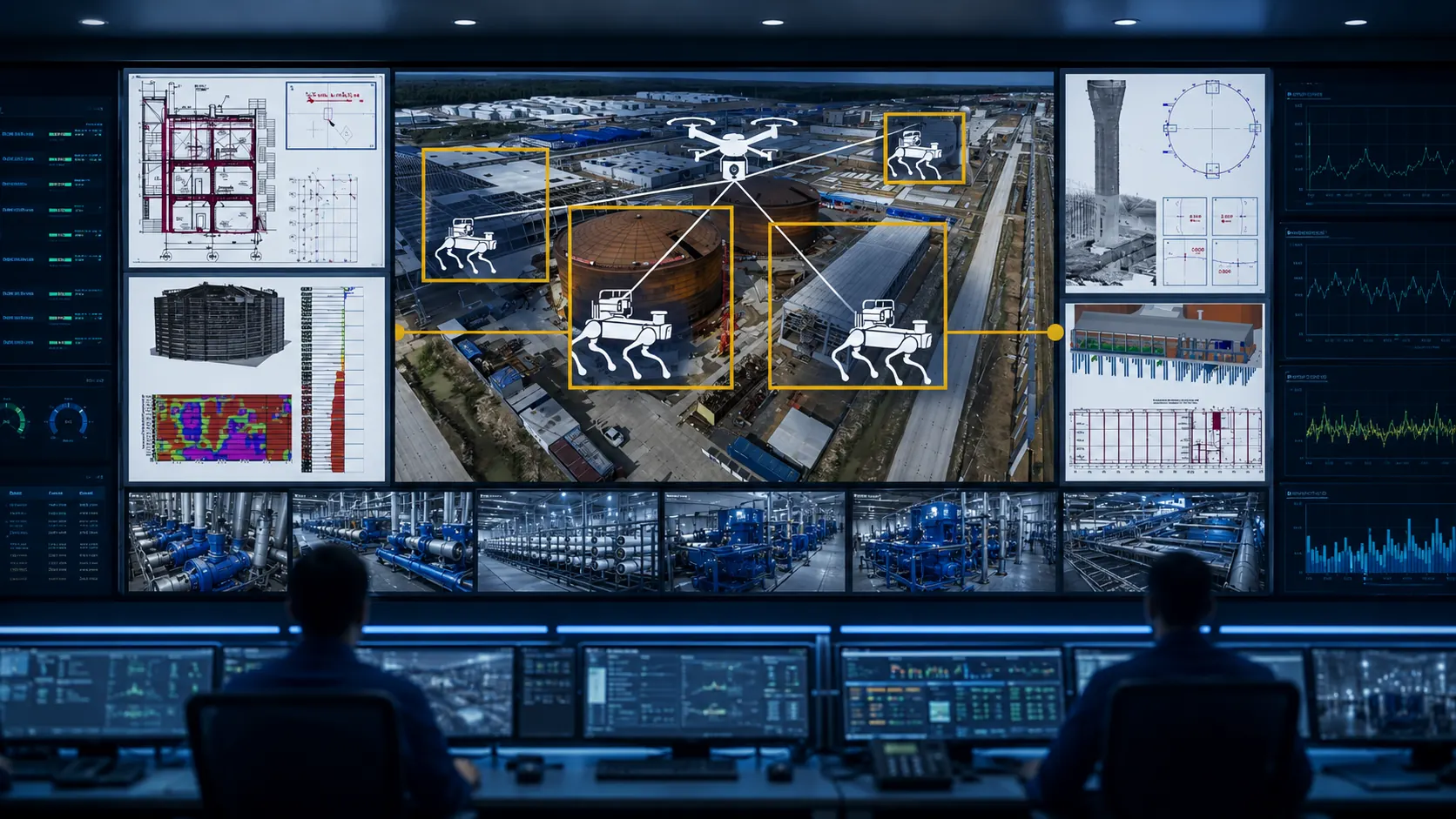
After discharge, a robot dog enters the hazardous area and streams video to the dashboard — personnel stay safe.
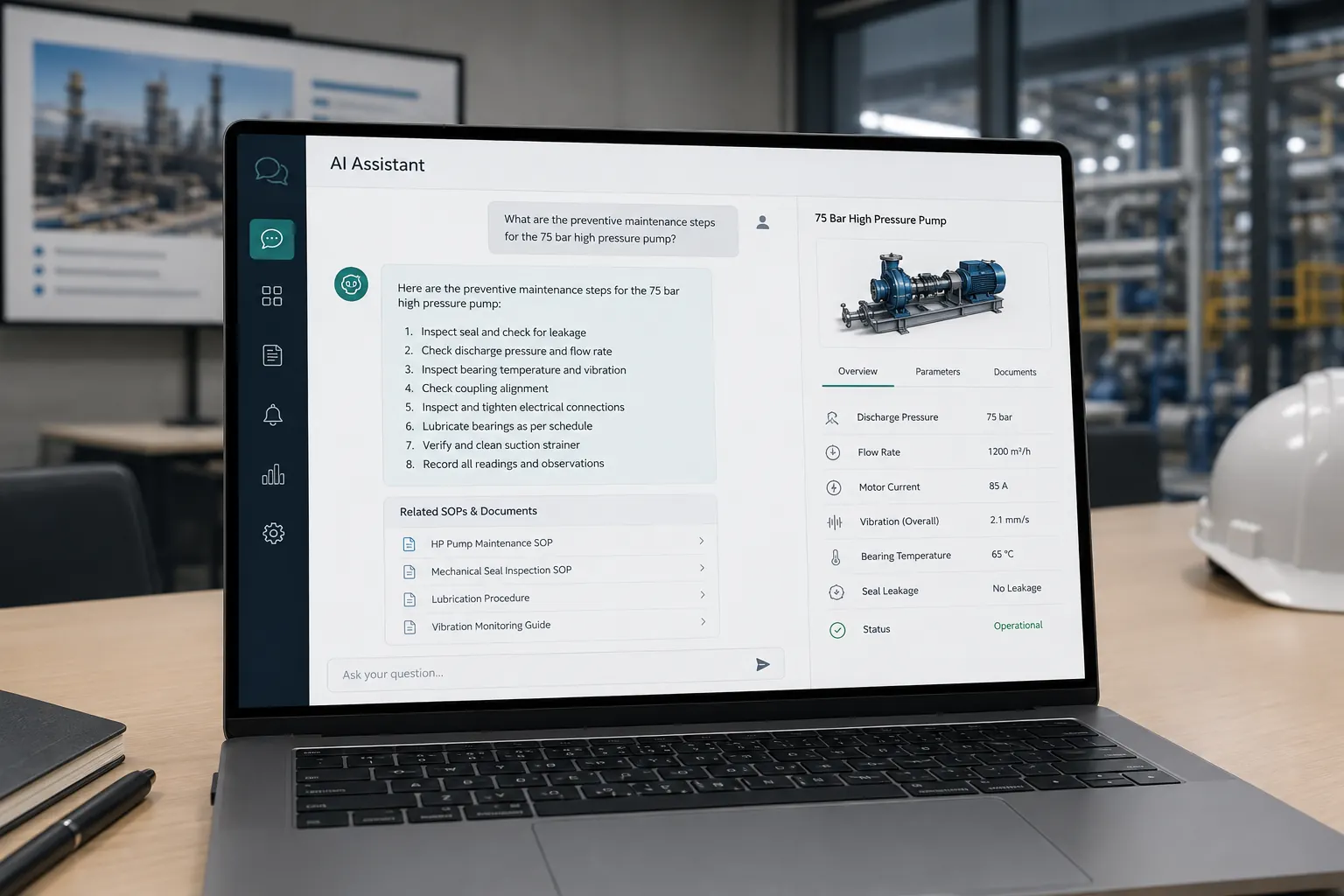
TeDora is grounded in the plant’s official documentation — SOPs, maintenance manuals for the 75 bar pump, ERD, VFDs, and NOVEC system, plus safety regulations and standards such as ISO and OSHA.
Industry examples show training time reduced by 25–35%, with new operators reaching independent productivity faster.
CyberStudio helps prevent critical equipment failures weeks before breakdown — enough time to order long-lead spare parts and convert emergency shutdowns into planned maintenance.
It uses existing plant data from SCADA (e.g. Yokogawa), vibration sensors, current, pressure, and temperature to build a digital baseline of normal operation. Early deviations are flagged long before protective alarms trigger.
Pilot result on gas turbines: ~40% reduction in unplanned shutdowns through early defect detection.
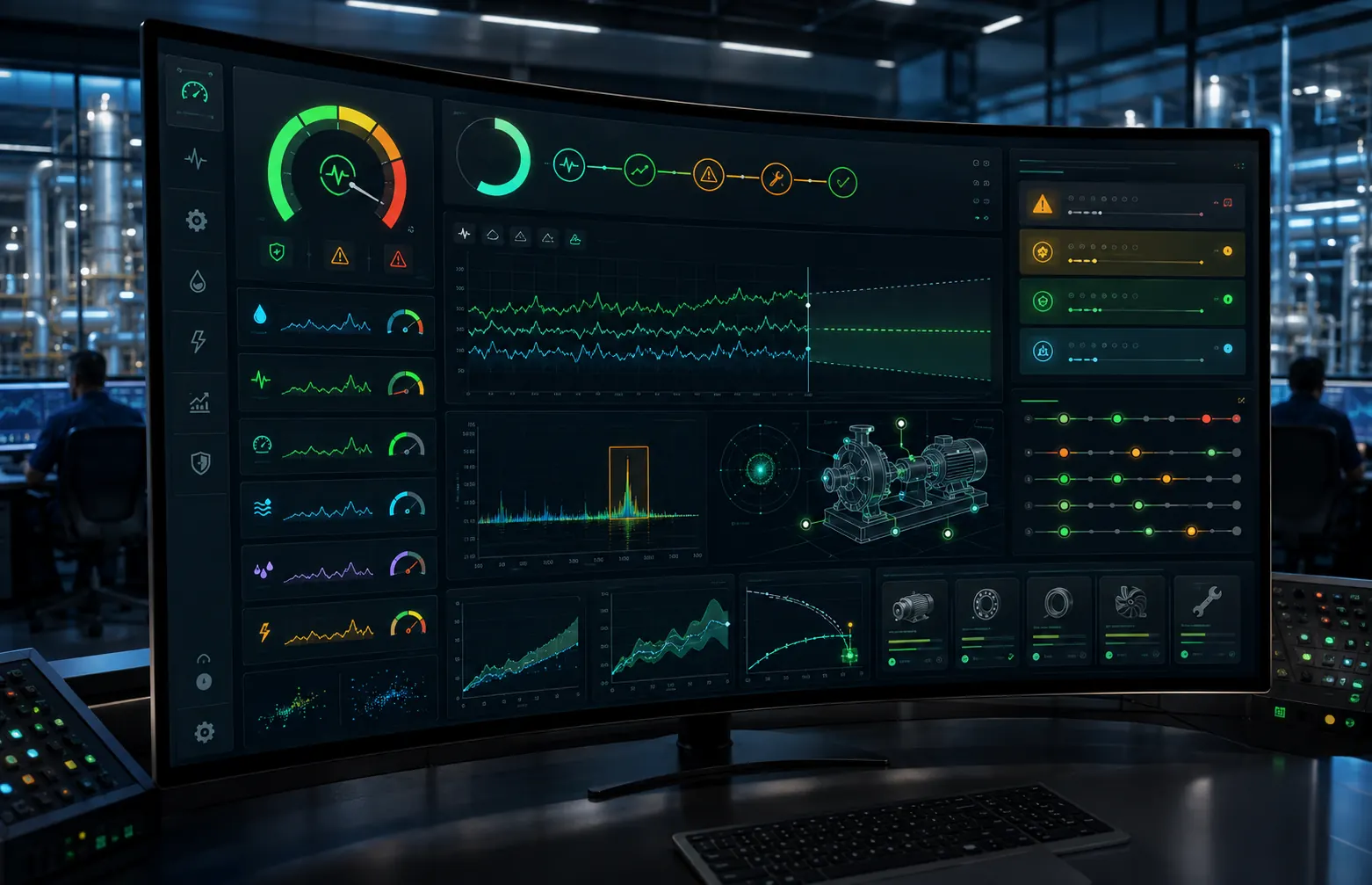
Predictive analytics identify fire hazards before visible flames or smoke — monitoring thermal cameras, temperature sensors, and environmental detectors for abnormal heat buildup, rapid temperature change, or electrical anomalies. Operators gain minutes of lead time instead of seconds.
When NOVEC 1230 activates, the dashboard shows a critical red alert from a dry-contact signal, with timestamp and zone. Specialized detectors then display real-time clean-agent concentration. Personnel stay out until levels fall below the safe threshold (typically <2%).
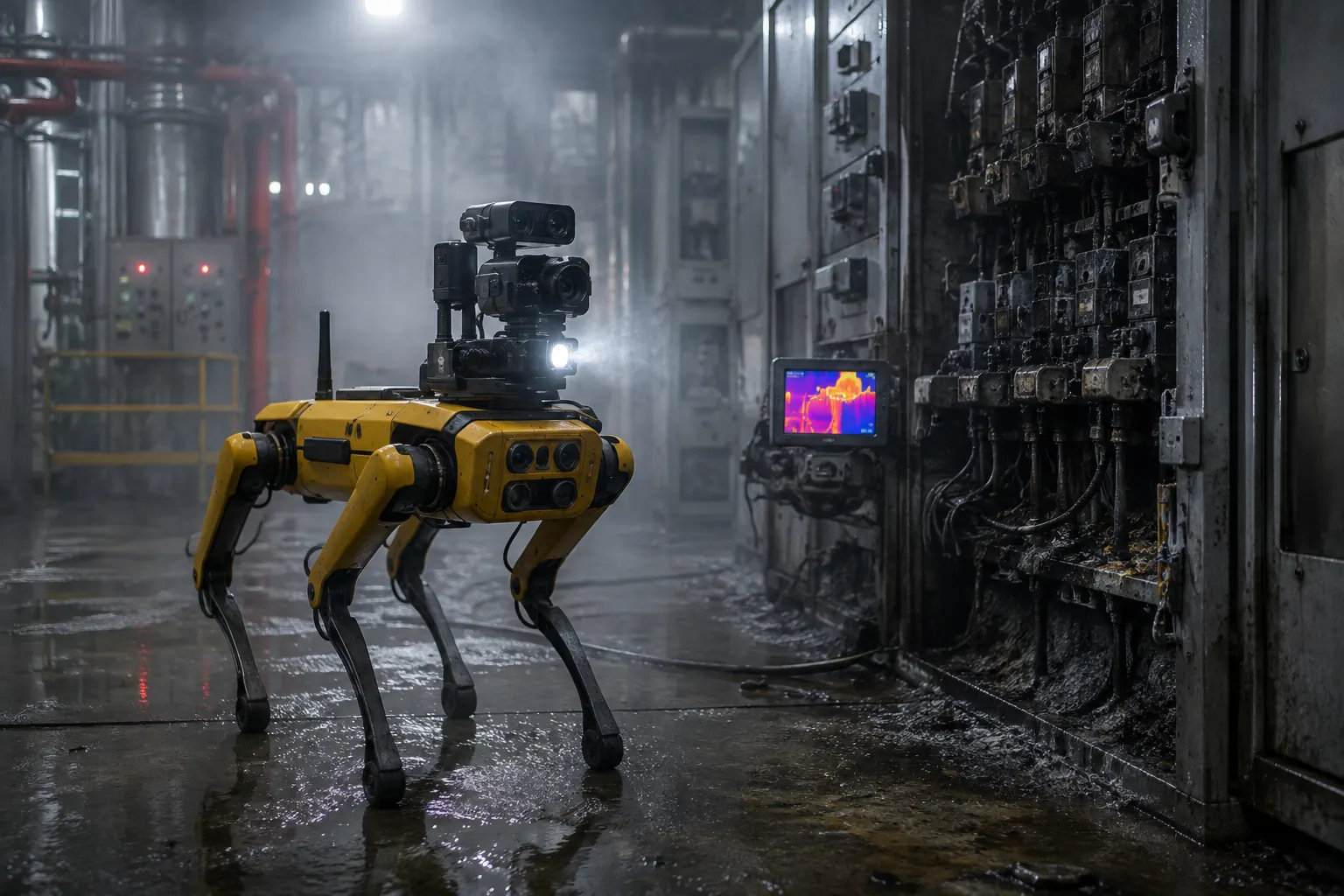
After suppression discharge, a quadruped robot (e.g. Boston Dynamics Spot or equivalent) enters the hazardous zone in place of personnel. It streams optical and thermal video, measures NOVEC concentration, oxygen, and toxic gases, and navigates stairs, debris, and tight spaces.
Inspection can begin immediately without waiting for full ventilation — keeping people out of harm’s way while preserving situational awareness.
Neural networks on the SAQR EDGE multisensory platform detect fluid leaks on pumps, pipelines, and critical equipment. Video from stationary cameras, drones, and robot dogs is processed on the edge — ultra-low latency without cloud dependency.
Models recognize droplets, puddles, sprays, wet surfaces, and vapor. Alerts include location, timestamp, and anomaly type so operators can act before high-pressure leaks escalate.
SAQR EDGE analyzes up to 16 scenarios in parallel across asset monitoring and incident detection.
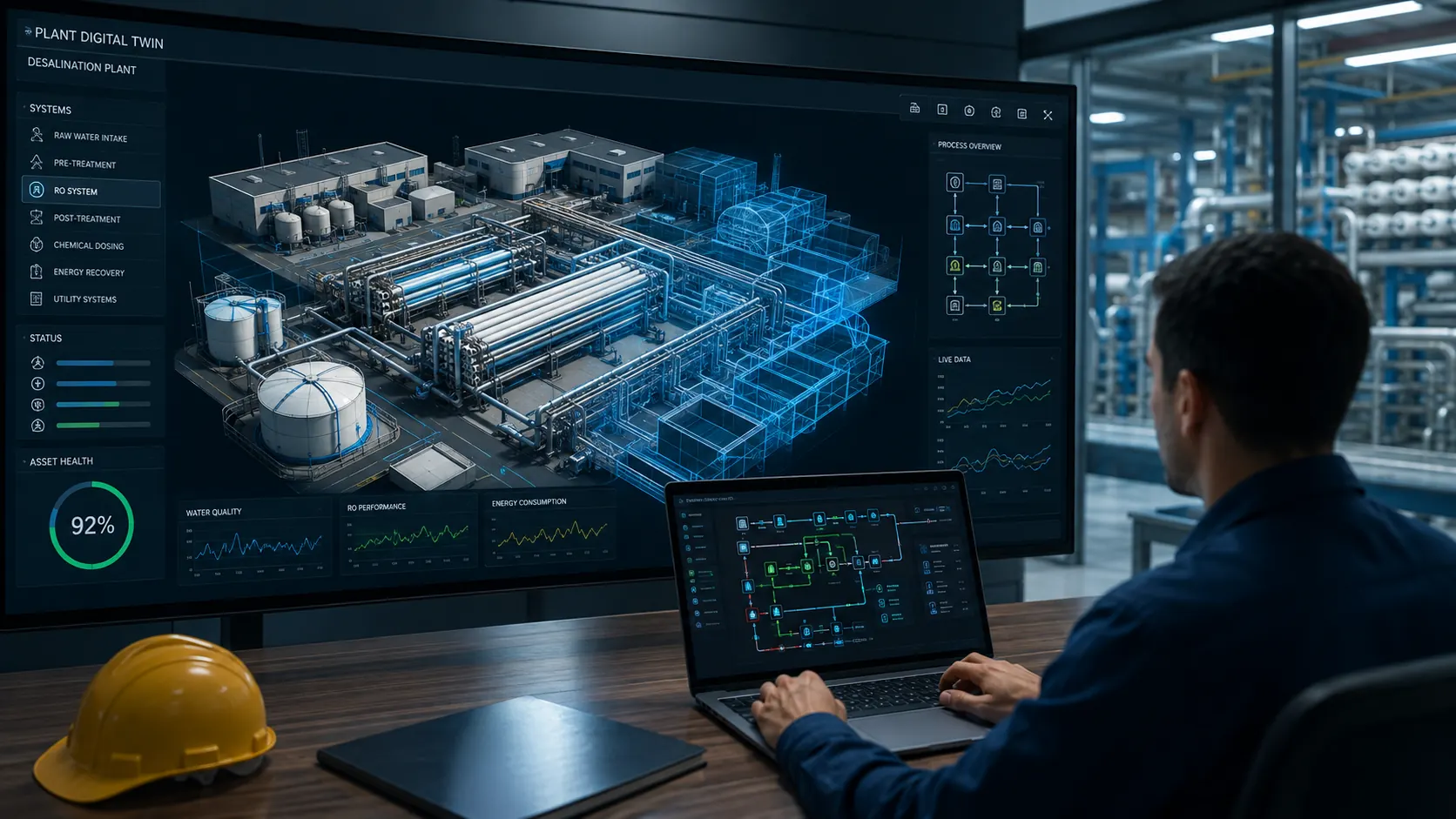
A virtual replica of the physical desalination plant — equipment, control systems, and process dynamics — so operators practice without risk to the real plant or personnel.
Reduces training time by 25–35%, cuts expensive on-equipment instruction, and prepares operators before they touch live controls.
Aligned with IEC 62443 — the global framework for industrial control system security.